
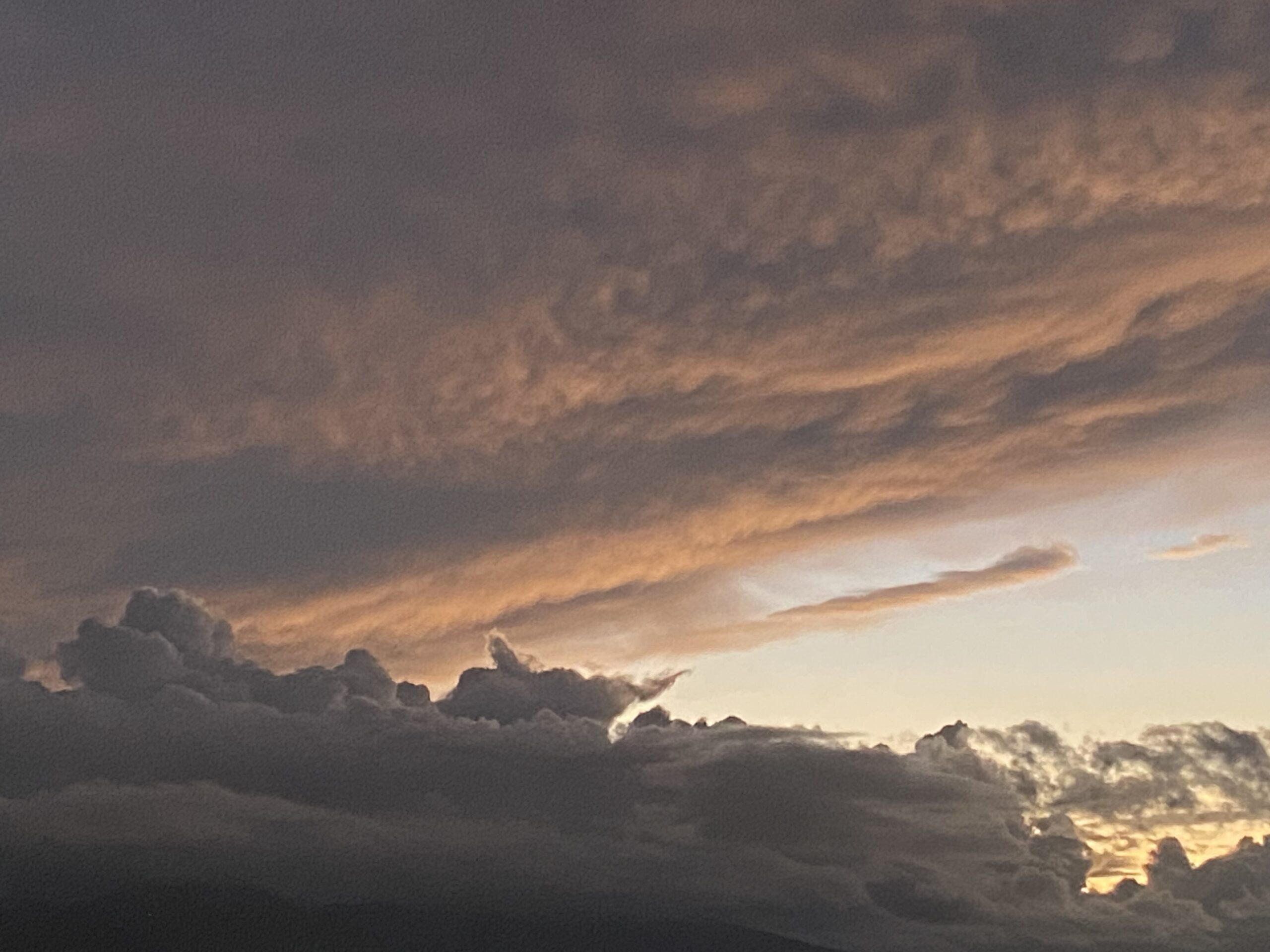
The Horns of a Storm
Storms and flooding have long served as powerful, ready-made subject for artists, offering a dramatic blend of excitement, danger, and the raw power of nature. These natural events capture a sense of urgency and unpredictability that resonates deeply with both artists and their audiences, inspiring creative responses across a variety of mediums. From the awe-inspiring chaos of tempestuous seas to the quiet devastation of waterlogged landscapes, artists explore these phenomena as metaphors for human emotion, resilience, and the impact of environmental forces.
Artists often rise to the challenge of interpreting the effects of extreme weather, utilising a wide range of approaches and techniques to convey the tension and beauty inherent in such events. For some, walking through storm-drenched landscapes becomes a performative act, embodying the physical connection between humans and the forces of nature. An example of this work is Richard Long, an English sculptor and land artist who uses various media including sculpture, photography and text. He broadened the idea of sculpture to be a part of performance art and conceptual art. He responded to clouds through text-based artworks. Long uses words to describe a walk he did in the Cairngorms national park in Scotland. In the Cloud describes the moment he walked over Ben Macdui, the tallest peak in the Cairngorms, and records how much time he spent enveloped in cloud. Long stated that: A text is a description, or story, of a work in the landscape. It is the simplest and most elegant way to present a particular idea.
Other artists such as Olafur Elliason turn to installations crafting immersive environments that replicate the sensory experiences of weather through sound, light, and tactile elements. Elliason brought the sun into Tate Modern through his installation The Weather Project in 2003-4. In the installation representations of the sun and sky dominate the expanse of the building’s Turbine Hall. A fine mist spreads through the space, as if creeping in from the environment outside. Throughout the day, the mist accumulated into faint, cloud-like formations, before dispersing across the space. In making the work Elliason was interested in exploring ideas about the viewer’s experience and their connection with what they are experiencing. When the installation was shown at Tate Modern, many visitors spontaneously lay on the floor looking up in order to experience the power of the work.
Photography captures fleeing moments of destruction and renewal, freezing ephemeral scenes in time, while painting and print convey the emotional and visual complexity of weathered landscapes. English artist Tacita Dean created a series of serigraphs on black cardboard “Horizon/Rain/Filthy Weather” 1998, laden with the blackest of palettes and furious energy of startlingly white marks topping waves in a broiling sea. The energy in these prints is palpable and draws the viewer into sensing the force or energy from the image.
Through these diverse methods, artists not only document the dramatic impact of storms and flooding but also provoke deeper reflections on the relationship between humanity and the natural world. Whether addressing themes of climate change, environmental fragility, or the sheer beauty of nature’s power, their work challenges viewers to consider both the vulnerabilities and strengths of our shared existence within an ever-changing environment.