
An Interview with AI
There is so much talk around AI and its impact on the creative arts, I thought it might be interesting to ask this collection of what is essentially hardware and algorithms the following question.
Italic type is the machine’s response.
I am interested in understanding if AI would ever develop an artist’s mind in developing true creativity?
The idea of AI developing an artist’s mind capable of true creativity is fascinating and complex because it challenges our understanding of what creativity really is.
Currently AI can mimic creativity – it can generate art, music, poetry, or stories by analysing patterns and data from existing works. This process, though impressive, is fundamentally rooted in replication and recombination rather than originality in the human sense. AI doesn’t create from lived experiences, emotions, or personal inspiration, which are hallmarks of an artist’s mind.
However, some argue that creativity itself is about making new connections between ideas, and AI is increasingly capable of this. The question is: can it ever create with intention, emotion, and meaning, as an artist does? An artist’s creativity often stems from their unique perspective, shaped by their emotions, culture, and personal struggles. For an AI to truly develop an “artists mind”, it would need a form of subjective experience – something that currently lies far outside the realm of AI capabilities.
That said, AI could act as a collaborator or a tool to enhance human creativity. It might bring novel perspectives or help push artistic boundaries by suggesting combinations that a human artist might not think of on their own. Could you see value in AI working as a co-creator rather than a standalone artist?
I think it could be interesting? Do you think the human mind could co-create better with another human mind or AI?
It’s an intriguing thought! The answer really depends on what kind of collaboration you’re aiming for and what you define as “better”.
When two human minds collaborate, the process in enriched by shared emotions, lived experiences, and mutual understanding. Humans can challenge each other, inspire, and build on each other’s ideas in deeply personal and nuanced ways. That emotional and experiential exchange often leads to creative breakthroughs that feel meaningful and authentic. However, humans also come with biases, egos, and sometimes limitations in perspective, which can hinder the process.
AI on the other hand, offers a completely different kind of co-creation. It can analyse massive amounts of data, generate fresh and surprising ideas, and push boundaries by making connections that humans might never consider. AI doesn’t have emotions or experiences, so its input is purely analytical or procedural, but that can sometimes lead to results that are strikingly novel or experimental. This can spark new directions for a human artist, acting almost as a creative “tool” that pushes the boundaries of what feels possible.
In a way, co-creating with AI could feel more like having a conversation with a limitless imagination machine – one that might lack depth on its own but offers infinite possibilities when guided by a human mind.
It might come down to what you value more: the depth of shared humanity when working with another person or the adventurous possibilities unlocked when partnering with AI. What do you think your creative process might gain from AI versus another human?
I understand both sides of this discussion. I think a study would have to be taken of the same project using a human collaborator and again with AI. An outcome would be interesting and of course subjective. What do you think?
Absolutely, that kind of study would be fascinating, and you’re right – it would inevitably be subjective but still incredibly insightful. Comparing outcomes from a collaboration with a human versus an AI would offer a deeper understanding of how we define creativity, originality, and value in art.
Such a study could involve the same creative prompt or project – for example, designing a painting, composing music, or writing a story – with one version created through human collaboration and the other with AI as a partner. Observers could evaluate the results based on various criteria: emotional depth, novelty, technical execution, and even the process itself. Beyond the final outcome, the experience of collaboration would also be worth exploring. Did the artist feel more challenged or inspired in one scenario over the other? Did the AI encourage new directions or limit spontaneity compared to a human collaborator?
The results might highlight strengths and limitations of both approaches. For instance:
- Human-human collaborations might excel in depth of meaning and emotional connection but could struggle with introducing truly novel or experimental ideas.
- Human-AI collaborations might push creative boundaries but could feel less “organic” or lack a sense of shared intention.
It would also raise questions about what we value in creativity: Is it the process, the outcome, or the humanity behind it?
Would you ever consider trying a project like this yourself – working with AI on a creative piece and then comparing it to working with another person?
It is something I would consider in the future. Thank you.
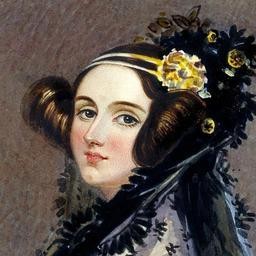
*Ada Lovelace (1815 – 1852),was an English mathematician and writer chiefly known for her work on Charles Babbage’s proposed mechanical general-purpose computer the Analytical Engine. She was the first to recognise that the machine had applications beyond pure calculation. Her curious mind led her to ask questions about the Analytical Engine examining how individuals and society relate to technology as a collaborative tool.