
Art and Climate Change
Artists have always approached life questioning the major encounters and experiences that face us all. Bill McKibben, an American environmentalist, author and journalist, wrote an article in 2005 entitled, “What the Warming World Needs Now is Art, Sweet Art”. He raised an insightful question about climate change in that although all of us know what climate change is from a factual and scientific viewpoint, we didn’t really know what it actually means. He asked “Where are the books? The Plays? The goddamn operas?” So the point was made that an understanding of the scientific facts is not enough and more needs to be done. He argued that if we want to affect change, we need to engage the other side of our brain that deals with CREATIVITY. We needed to approach the problem with our imagination. And the best people suited to achieving this, he believed, were the ARTISTS.
Climate change art raises awareness of the climate crisis. Political engagement engages viewers in a more subtle way of information dissemination. Art spreads a message that has no boundaries and goes beyond any data driven representations.
Olafur Eliasson, artist and climate activist, In December 2015, presented a symbolic work Ice Watch in Paris during a meeting of world leaders held in France. The sculpture featured 80 tons of ice from a fjord near Nuuk, Greenland. It was presented aiming to inspire collective action against climate change. The intention of watching the ice melt was to give a glimpse into the future of our planet.
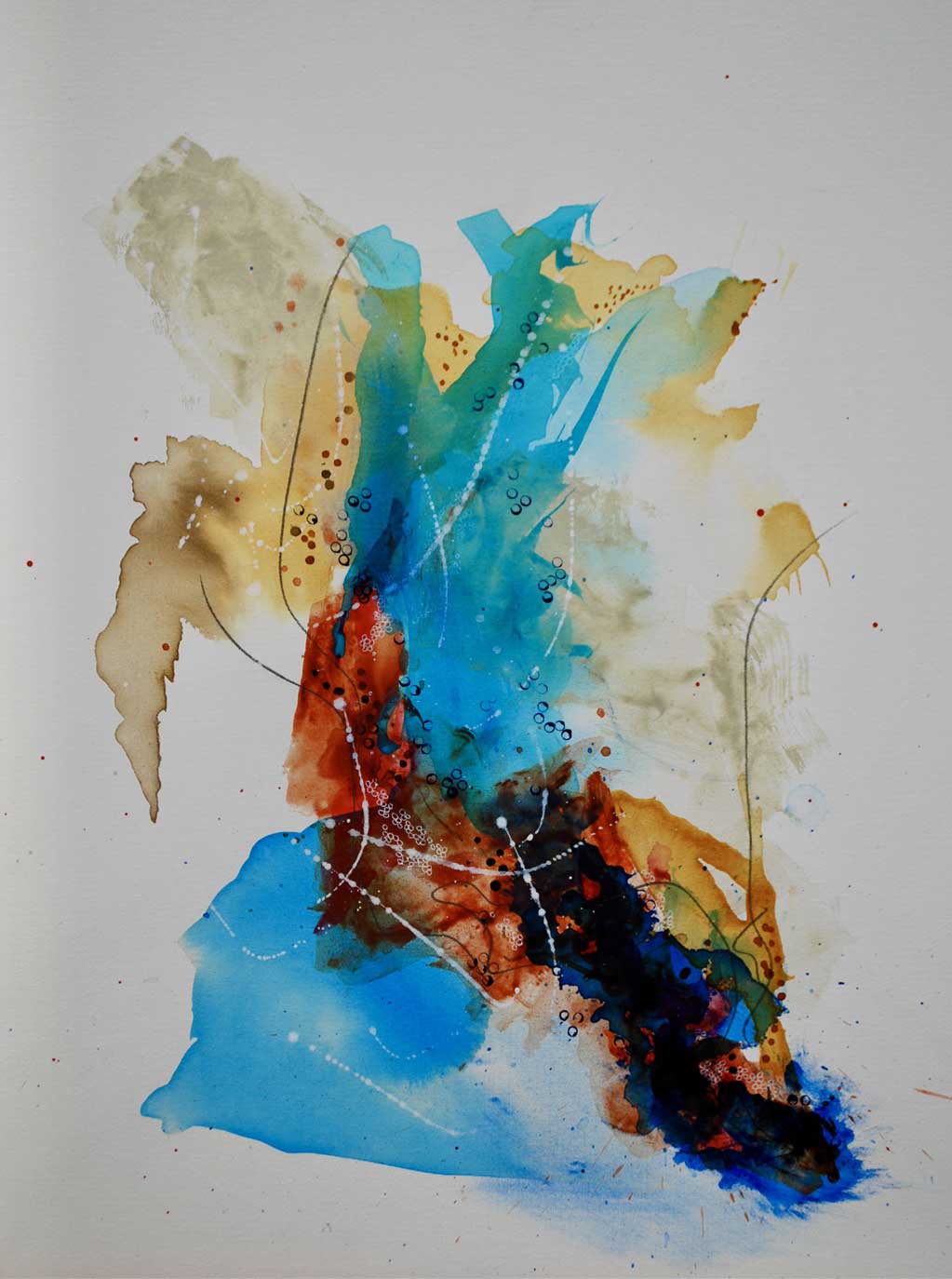
In my own practice I have travelled through varied terrains and have been fortunate in experiencing, desert, rainforest and snow fields, in search of isolated spaces for creative inspiration. These landscapes and natural forces have developed my visual descriptions of the changing natural landscape. I have been immersed and stimulated by the movements and shifts in the forces of nature surrounding all of us.